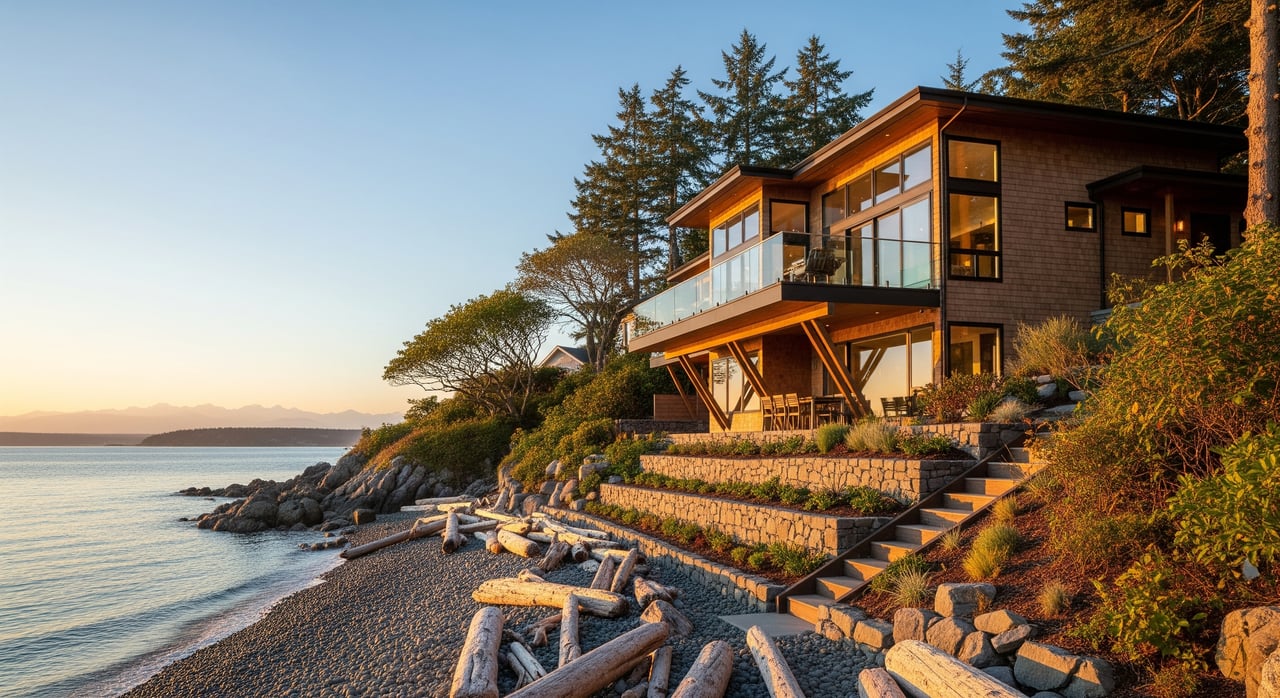
Planning work on an Edmonds bluff, beach, or near Lake Ballinger? The right permits can decide your timeline and budget. If your project touches shoreline areas or steep slopes, extra approvals often apply that go beyond a standard building permit. In this guide, you’ll learn what triggers those permits, who reviews them, and how to plan your next steps with confidence. Let’s dive in.
What counts as shoreline in Edmonds
Shoreline rules apply to Puget Sound, Lake Ballinger, and tidally influenced parts of Edmonds Marsh, plus upland areas within about 200 feet of the ordinary high water mark and associated wetlands. The City implements these rules through its Shoreline Master Program. You can review the City’s overview of shoreline jurisdiction and process in the Shoreline Master Program resources.
When extra shoreline permits apply
Under state law, most development inside shoreline jurisdiction needs review. A common trigger is the “substantial development” threshold. Ecology cites a dollar threshold used statewide to determine when a Shoreline Substantial Development Permit is required, for example a figure of 8,504 dollars. Even if your project falls below the dollar threshold, you may still need a shoreline conditional use or variance if you do not meet local standards. See permit types and thresholds in Ecology’s shoreline permits guidance.
Common shoreline triggers in Edmonds
- Building or expanding within designated shoreline setbacks or buffers.
- Work near coastal bluffs where bluff setbacks apply.
- Projects that do not fit the allowed uses for a shoreline designation.
Edmonds lists shoreline setbacks, bluff setbacks, and buffers by shoreline designation. If your plan intrudes into these areas, expect a shoreline permit and possibly a variance. Review the standards table in ECDC 24.40.090.
Steep slopes and geologic hazard rules
Edmonds regulates erosion and landslide hazard areas. Examples include slopes of 40 percent or steeper that exceed a vertical height of 10 feet, and slopes steeper than 15 percent where groundwater seepage or certain soil conditions are present. Coastal bluff classifications are also considered. If your site meets these criteria, it is a regulated geologically hazardous area. See definitions in ECDC 23.80.020.
When geotechnical reports are required
If development is within or near a mapped hazard, the City typically requires a geotechnical or critical area report from a licensed professional. The report must address hazards within 200 feet of the project area and provide appropriate analysis and recommendations. A report is often required when a hazard is within about 50 feet of the work area or when the Director deems it necessary. See report scope and qualifications in ECDC 23.80 Article III.
Mitigation, design, and recorded notices
Expect engineered erosion control, drainage design, foundation or retaining wall details, and sometimes increased setbacks or no-build buffers. Where work occurs in landslide or earth-subsidence hazard areas, the City may require recorded notices or covenants before issuing building permits. See related provisions in ECDC Title 19.10 and the code’s contents. County resources provide additional context on typical practices in hazard areas, including recorded covenants, as shown in Snohomish County’s landslide hazard guidance.
In-water or near-water work often needs state and federal permits
Projects that remove, place, or alter material in the water or intertidal areas typically require additional approvals.
WDFW Hydraulic Project Approval
Any project that uses, diverts, obstructs, or changes the natural flow or bed of state waters usually needs a Hydraulic Project Approval. Standard HPAs are typically processed within 45 days of a complete application, and emergency or pamphlet HPAs exist for limited situations. Learn more in WDFW’s HPA overview.
U.S. Army Corps of Engineers permits
Work in navigable waters or any discharge of dredged or fill material into waters or wetlands often needs USACE authorization. Coverage may be under a Nationwide Permit or an individual permit for larger impacts, and Section 401 water quality certification may also apply. See the USACE permit guide.
SEPA environmental review
Non-exempt shoreline and land use permits often include SEPA review. This can mean an environmental checklist, mitigation conditions, or in rare cases an EIS. The local government typically serves as lead agency. See SEPA guidance from Ecology.
Building, grading, and stormwater permits
Grading, retaining walls, shoring, and structural work require local permits and engineering review. Changes in drainage or impervious area can trigger stormwater review. Check current submittals and fees in the City’s development fees information.
Pre-application checklist for Edmonds homeowners
- Meet with Edmonds Planning and Development staff to confirm shoreline jurisdiction, shoreline environment designation, and any mapped critical areas. See the City’s SMP resources.
- Verify if your work is within 200 feet of the ordinary high water mark or inside a bluff, steep slope, landslide, or erosion hazard area.
- If your work touches waterward areas, tidal zones, or intertidal beach, plan to coordinate on an HPA and possible USACE authorization. See WDFW HPA guidance and the USACE permit guide.
- If hazards are mapped or likely within about 50 feet of the work, hire a licensed geotechnical engineer or qualified geologist to prepare the required report per ECDC 23.80 Article III.
- Plan for recorded notices or covenants when building in landslide-prone areas, and factor in maintenance obligations. See ECDC Title 19.10.
- Budget for studies, engineered design, mitigation planting, permit fees, and potential consultant support. Reference the City’s development fees.
Timeline and process insights
For shoreline substantial development permits, the City issues the permit and files it with Ecology, which starts a 21-day state appeal period. Conditional use and variance permits include Ecology review and often take longer. The HPA process typically runs up to 45 days after a complete application. Because multiple approvals often stack together, a pre-application meeting helps you coordinate sequencing and avoid delays. See the City’s SMP overview and Ecology’s shoreline permits page. For an example of how permits commonly stack on waterfront projects, see this summary of shoreline permitting processes.
Real-world scenarios to watch
- Adding a deck near the bluff edge. If the deck intrudes into the bluff setback, you may need a shoreline variance and geotechnical recommendations before a building permit.
- Repairing a bulkhead. Hard shoreline stabilization is strictly regulated, may need conditional use or variance review, and often requires HPA and USACE authorization, plus SEPA and mitigation.
- New driveway on a steep lot. Even if outside shoreline jurisdiction, mapped slope hazards can require a geotechnical report, drainage design, and recorded notices before building permits.
Ready to talk through your property’s specifics and how to position your project, budget, or sale timeline around these rules? Reach out to Strong Properties for thoughtful, high-touch guidance tailored to your goals.
FAQs
Do Edmonds shoreline rules apply to my property near the water?
- The Shoreline Master Program typically applies waterward of the ordinary high water mark and to upland areas within about 200 feet of it, plus associated wetlands, as described in the City’s SMP resources.
What is the dollar threshold for a Shoreline Substantial Development Permit?
- Ecology cites a statewide dollar threshold used to determine substantial development, for example 8,504 dollars, and projects at or above that amount typically need an SDP; other permit types can still apply below the threshold per Ecology’s guidance.
Do I always need a geotechnical report on a steep lot?
- If your project is within or near a mapped landslide or erosion hazard area, Edmonds commonly requires a geotechnical or critical area report by a licensed professional, as outlined in ECDC 23.80 Article III.
Can I build or repair a bulkhead in Edmonds?
- Hard shoreline stabilization is tightly regulated and often needs shoreline permit review, HPA, and possible USACE authorization, with mitigation and alternatives analysis expected; see Ecology’s shoreline permits and WDFW’s HPA overview.
Who reviews shoreline permits in Edmonds?
- The City administers shoreline permits under its SMP, while Ecology reviews and must approve shoreline conditional uses and variances; see the City’s SMP overview and Ecology’s process page.
What happens if I work without an HPA or shoreline permit?
- Agencies can enforce noncompliance, require restoration, and issue penalties; WDFW lists potential civil and criminal penalties for HPA violations and Ecology enforces shoreline compliance, as noted in WDFW’s HPA guidance and Ecology’s permits page.